
Bush Hogging in Taylorsville & Central Kentucky
Fields, pastures and lots don't stay clear on their own. A season or two of neglect and you've got waist-high weeds, briars, and saplings starting to harden off. Bush hogging is the regular haircut that keeps ground usable — for pastures, fields, and acreage five acres and up across Central Kentucky.
What we cut
Overgrown fields and pasture. Fallow ground that needs knocking down before it goes to brush. Roadside and fence-line growth. Ground too rough, steep or grown-up for a finish mower. If it's past what your riding mower can handle and you've got the acreage, it's a bush hog job


When to schedule
A cut about every two months keeps most Kentucky fields in shape. Fields that haven't been mowed in a few years usually need a heavier first cut — sometimes
forestry mulching — then drop back to normal mowing. We'll tell you honestly which one your property needs.
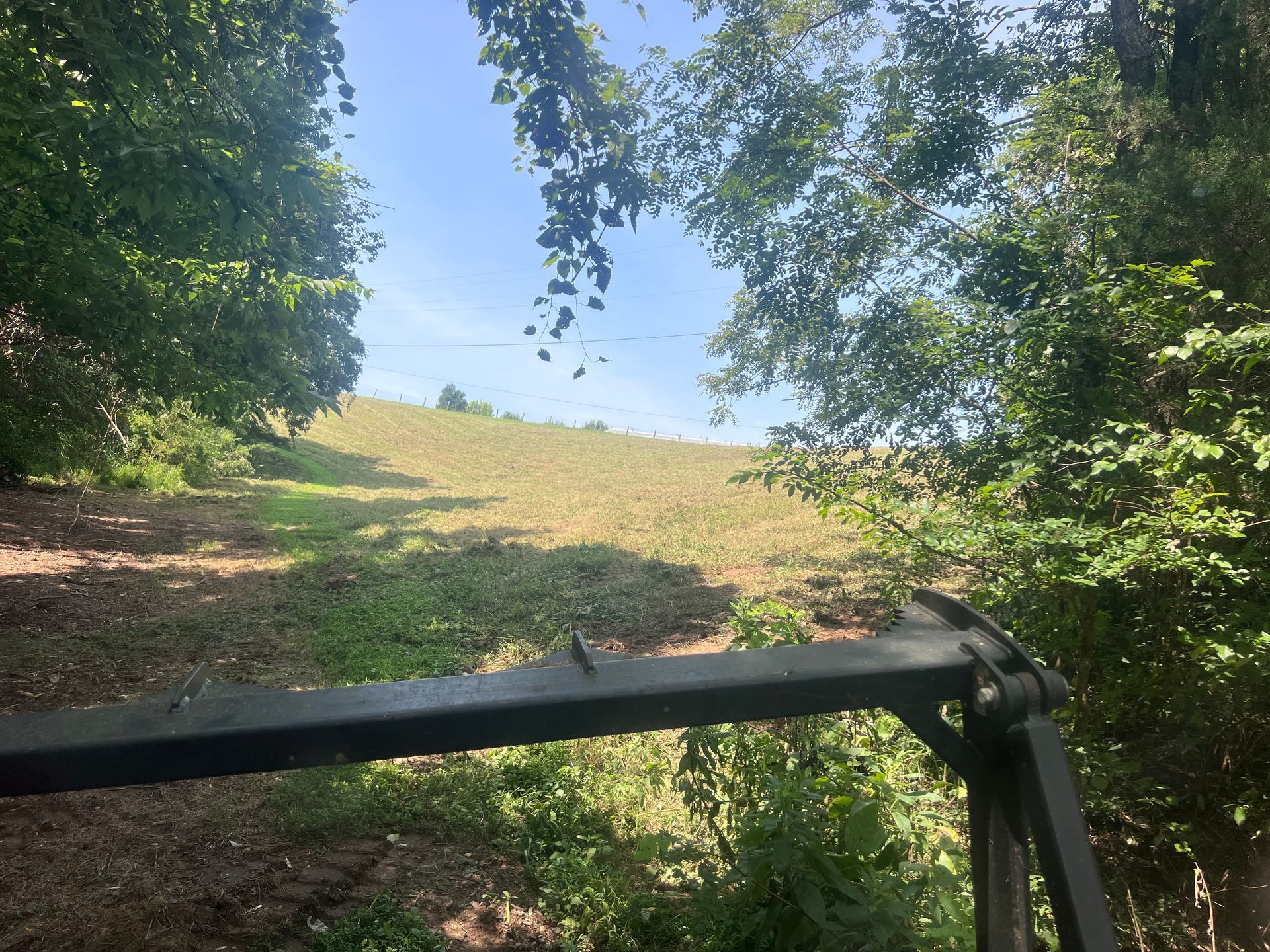
Five acres and up
Bush hogging pencils out at five acres and more — that's our minimum, and it's where the equipment earns its keep. One of our longest-standing reviews is from a customer other companies turned down — six acres that hadn't been cut in a decade, brush five and six feet tall. We cleared it the week after he called. Whether it's a first heavy cut or regular upkeep, we'll give you a straight price after a look at the field.
Where we work
Based in Taylorsville; serving
Mt Washington,
Shepherdsville,
Shelbyville, Fisherville,
Louisville and everywhere within two hours, including Bardstown, Elizabethtown, La Grange, Lexington, Georgetown and Richmond.
Schedule Your Free Estimate
Contact Us
FAQ's
How often should a field be bush hogged?
Regular cutting — about once every two months — keeps most Kentucky fields in shape. Fields that haven't been mowed in a few years usually need a heavier first cut — sometimes forestry mulching — then drop back to normal mowing.
What's the difference between bush hogging and forestry mulching?
Bush hogging is mowing: weeds, briars, light saplings. Mulching is for woody growth — cedar thickets, head-high brush, small trees. If you're not sure which you need, send a photo when you text us.
Is there a minimum size for bush hogging?
Yes — five acres. If your riding mower can't handle it and you've got five acres or more, we're the next call.